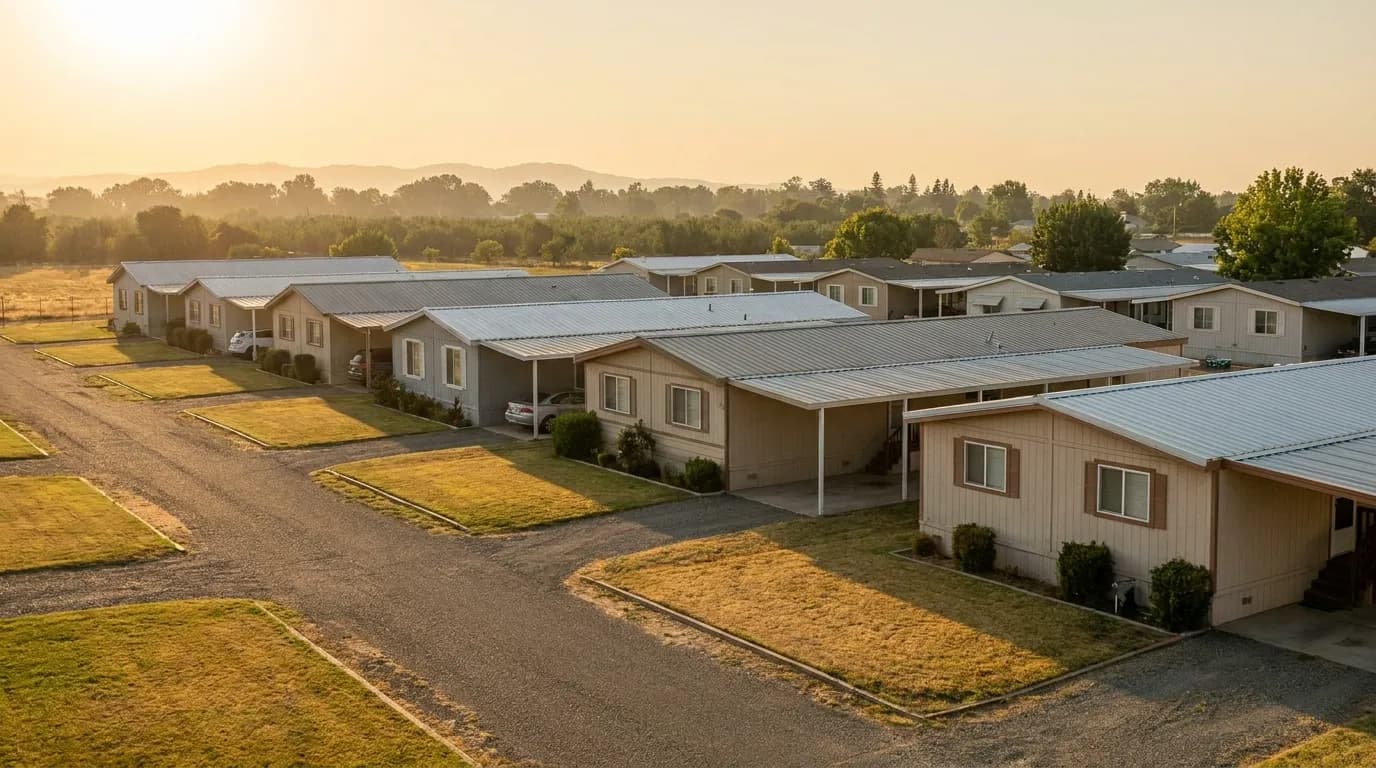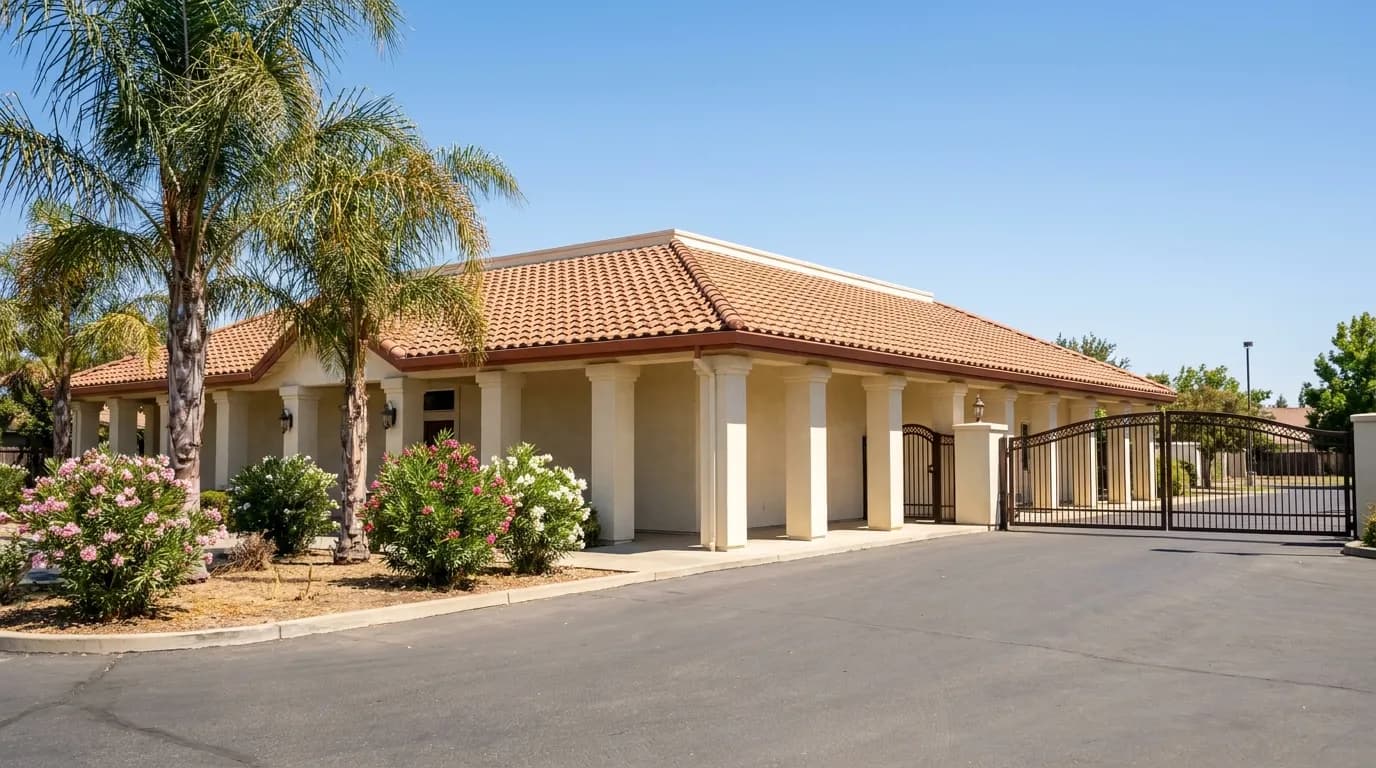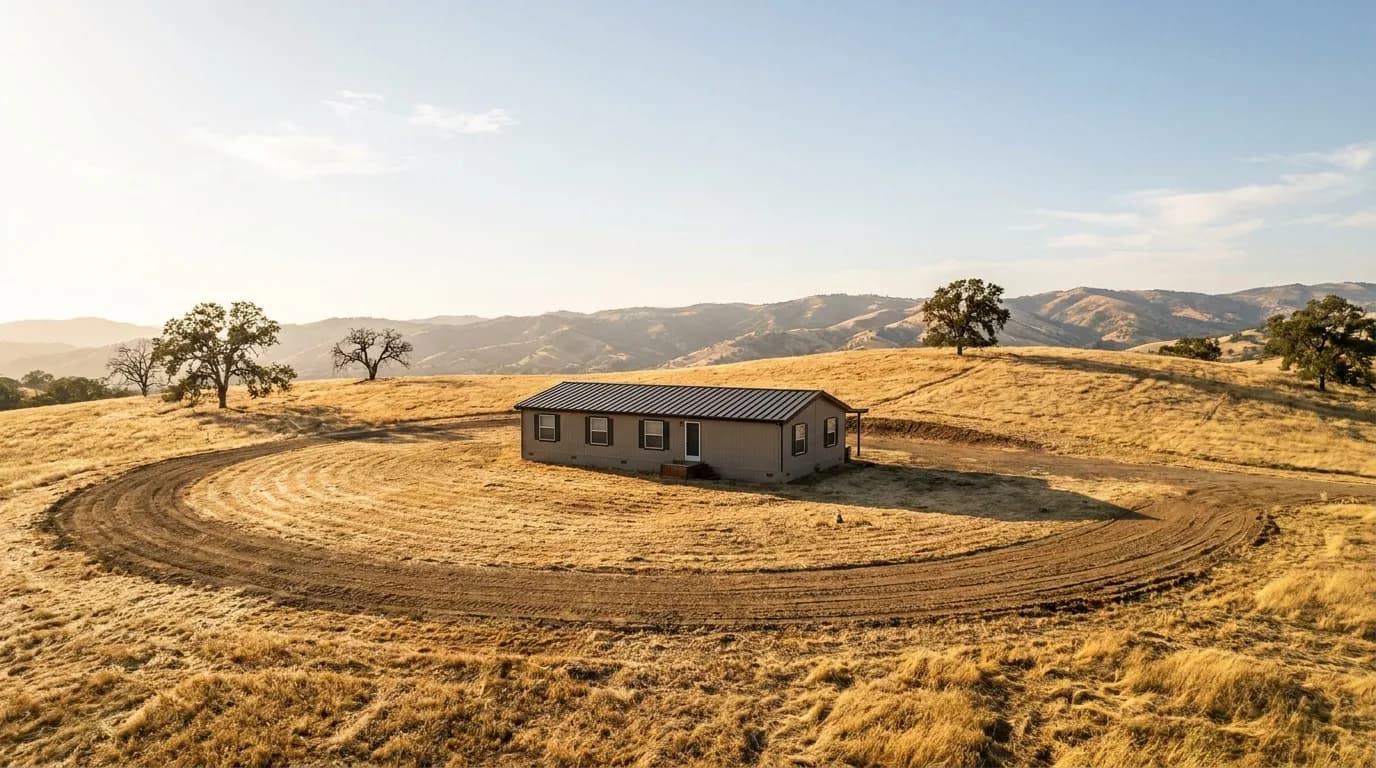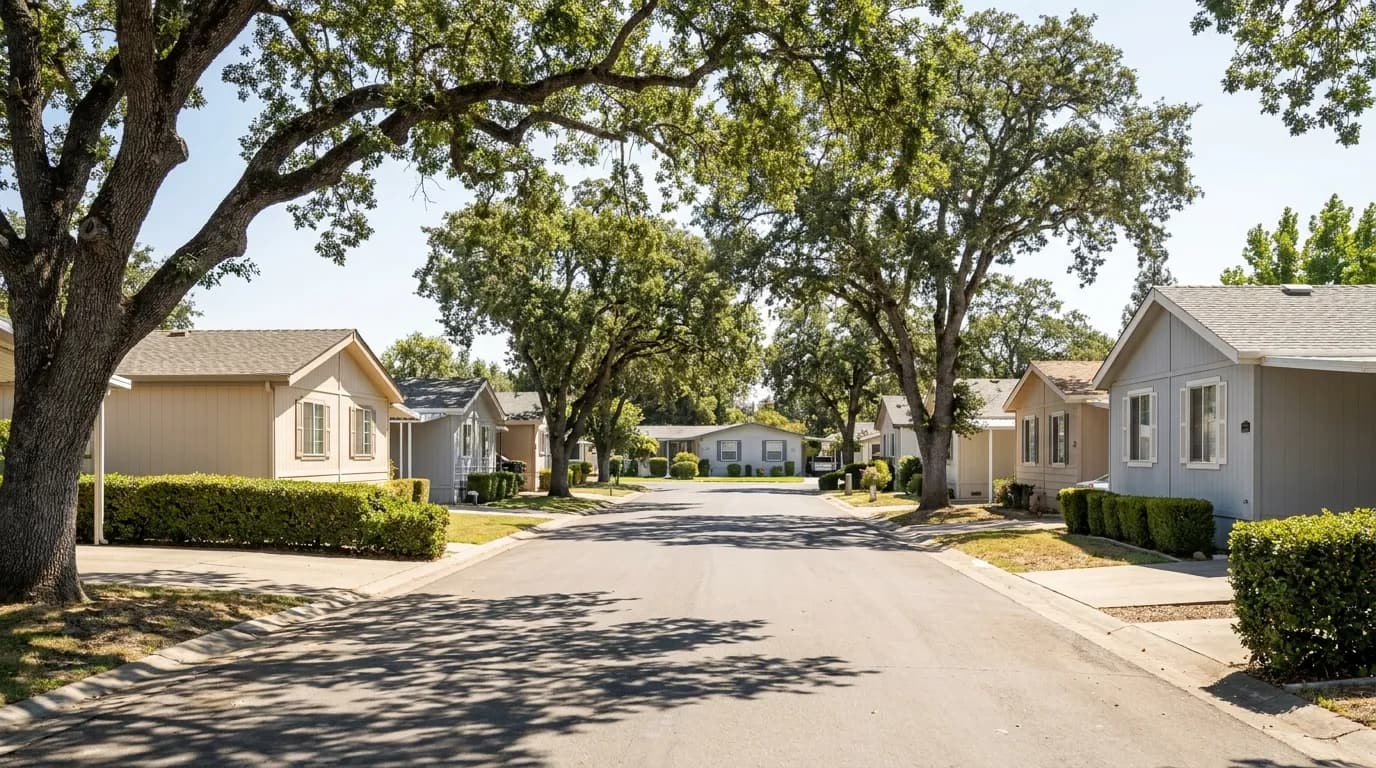
Search "senior mobile home parks near me" from a house in Citrus Heights and you get a cluster of pins spread from North Highlands out to Folsom. Every pin looks like the same product: a gated age-restricted community, a clubhouse, a pool, a monthly space rent.
They are not the same product. Within a 35 mile circle drawn around Citrus Heights you cross a county line, you cross in and out of city limits several times, you change electric utilities, and you move in and out of areas the state remapped for fire hazard in 2025. Each of those shifts changes something concrete about owning a home there.
Here is what actually differs, and why it matters before you pick a community rather than after.
The county line is the biggest divide, and buyers rarely notice it
Citrus Heights, Carmichael, Orangevale, Fair Oaks, North Highlands, Antelope, Rancho Cordova, Folsom and Sacramento proper all sit in Sacramento County. Roseville sits in Placer County.
That one line changes the paperwork on every transaction.
When a manufactured home that is on the local property tax roll changes hands, the California Department of Housing and Community Development will not transfer title until the county tax collector issues a tax clearance certificate. Which county issues it depends on where the home sits. A Roseville purchase runs through Placer County. A Citrus Heights purchase runs through Sacramento County. Different offices, different queues, different timing.
The same split applies to assessment. A Sacramento County home is valued by the Sacramento County Assessor. A Roseville home is valued by the Placer County Assessor. If you ever affix the home to a permanent foundation, the recorded form goes to that county's recorder.
None of this is difficult. It is just the single most common reason a buyer's expected timeline and the actual timeline stop matching, because people assume "Sacramento area" means one office.
Incorporated cities versus unincorporated county
This one surprises people who have lived here for decades.
Citrus Heights, Rancho Cordova, Folsom, Roseville and Sacramento are incorporated cities. They have their own councils, their own municipal codes, and their own code enforcement.
Carmichael, Fair Oaks, Orangevale, North Highlands and Antelope are unincorporated Sacramento County. They have identities, post offices and community associations, but no city council. Permits, zoning questions and code complaints go to Sacramento County.
For a 55+ community buyer this matters in two practical ways. First, if you ever want to add a carport, a shed, a ramp or a room addition, the permitting authority is the county, not a city hall you can drive to on Greenback Lane. Second, any local rent ordinance would have to come from the county board of supervisors rather than a city council, which is a very different political path. More on that below.
The electric utility changes, and parks bill it differently
Most of the region is served by SMUD, the Sacramento Municipal Utility District, which covers essentially all of Sacramento County and a small adjoining slice of Placer County. Roseville is served by Roseville Electric, the city's own municipal utility.
Inside a park, that distinction is usually one more layer removed from you, because many communities submeter electricity and bill residents through the space rent statement rather than through the utility directly. Ask any community you are serious about how utilities are handled: master meter with submetering, or direct billing from the utility. It is the number most often missing when a buyer compares two communities on space rent alone and concludes one is cheaper.
Rent stabilization: the Sacramento region is mostly bare ground
California leaves mobilehome park space rent stabilization to local government. Some California cities and counties have ordinances that limit annual space rent increases. Many do not.
Reviewing the statewide list of mobilehome park rent stabilization ordinances maintained by the Mobile Home Park Home Owners Allegiance, we did not find an ordinance for Sacramento, Sacramento County, Citrus Heights, Roseville, Folsom, Rancho Cordova or Elk Grove. The one nearby jurisdiction on that list is Rocklin, in Placer County, with an ordinance dating to 1982.
Treat that as a starting point and not as legal research. Ordinances get adopted, amended and repealed. Before you buy, call the city clerk or the county clerk of the board for the jurisdiction the park sits in and ask directly whether a mobilehome park rent stabilization ordinance is on the books. We wrote a fuller walkthrough of how that framework works and how to check it in our guide to Sacramento County space rent.
The 2025 fire hazard maps redrew part of this region
In March 2025 CAL FIRE released updated Fire Hazard Severity Zone maps for local responsibility areas in Sacramento County, the first substantial revision in well over a decade. They are not evenly distributed.
The bulk of the mapped hazard sits in the county's eastern unincorporated open lands, with roughly 60,265 acres in the moderate class. Among the cities, Rancho Cordova carries about 11,677 acres of moderate hazard and Folsom about 5,293 acres of moderate hazard. Elk Grove, Galt and the City of Sacramento each carry smaller pockets, some of them in the high class. County-wide the maps show roughly 2,166 acres of high hazard and 1,267 acres of very high, the latter up substantially from the prior mapping.
The practical consequence for a buyer is insurance, not evacuation drills. A home inside or near a mapped zone can be harder to place with a standard carrier and may end up on the California FAIR Plan. That is a solvable problem, but it is a cost you want quoted before you write an offer, not after. We cover it in manufactured home insurance and wildfire exposure.
How the cities feel different on the ground
Beyond the administrative differences, the communities themselves have distinct characters, largely because of when the surrounding areas were built out.
Citrus Heights and North Highlands sit in the older ring of postwar suburban Sacramento. Communities here tend to be long established, close to Greenback Lane and Auburn Boulevard retail, and priced toward the accessible end of the regional range.
Carmichael, Fair Oaks and Orangevale run along the American River corridor. Lots in the surrounding neighborhoods are larger and the feel is more wooded and semi-rural, particularly as you move east on Hazel Avenue.
Rancho Cordova is organized around the Highway 50 corridor and the Gold Line light rail, which matters if you want to give up a second car.
Folsom is the higher-priced end of the region, with the lake, the historic district and newer surrounding development, and the space rents in that submarket generally reflect it.
Roseville is its own market entirely, in another county, with its own utility and its own retail gravity.
Antelope sits at the seam near the Placer County line and was built out considerably later than Citrus Heights, so the housing stock around it skews newer.
What to actually ask before you commit
For any community you are seriously considering, get these in writing:
- Current space rent, the full utility arrangement, and the community's recent history of rent increases.
- Whether the jurisdiction has a mobilehome park rent stabilization ordinance.
- The community's tenancy approval standards, including the credit score threshold, which California law requires management to disclose.
- The age of the home, and whether it predates June 15, 1976, because that changes financing and insurance.
- An insurance quote on the specific address, especially east of Folsom Boulevard toward the foothills.
If you would rather have someone who works these communities weekly do that legwork with you, browse what is currently available or start a financing conversation before you fall in love with a specific home. If you already own in one of these communities and are thinking about the other direction, here is how we handle sellers.
*This article is general information about the Sacramento region and is not legal, tax or insurance advice. County boundaries, local ordinances and hazard maps change, and the details of any individual community are set by its own management. Verify anything here with the relevant city, county or state agency before you rely on it.*
Sources: CAL FIRE Office of the State Fire Marshal, Fire Hazard Severity Zones; Sacramento County Assessor, Modular, Mobile, and Manufactured Homes; California Revenue and Taxation Code section 5832, tax clearance certificates; SMUD service territory; California Mobilehome Park Space Rent Stabilization Ordinance list
Want a second opinion on your specific situation?
Every community and every home is a little different. Joe can walk through yours with you, whether you are buying, selling, or just working out whether the numbers make sense.