Insurance is the step buyers in this market leave until last, and it is the step most likely to change the deal. In California right now it deserves to be step two, right after you identify the home.
Two things have moved recently, and both matter for a manufactured home in the Sacramento region.
What the 2025 fire hazard maps actually said about Sacramento County
In March 2025 CAL FIRE released updated Fire Hazard Severity Zone maps covering local responsibility areas in Sacramento County, the first substantial revision to the state's hazard mapping here in roughly fourteen years. The maps are built from fire history, vegetation, weather and terrain.
The result for this county was not uniform, and the distribution is worth knowing before you shop.
Roughly 78,000 acres county-wide fall into some mapped hazard class. The bulk of it, about 60,265 acres of moderate hazard, sits in the eastern unincorporated open lands. Among the cities, Rancho Cordova carries about 11,677 acres of moderate hazard and Folsom about 5,293 acres. Elk Grove has roughly 554 acres of moderate and 26 acres of high. Galt has about 49 acres of high, and the City of Sacramento about 45 acres of high. County-wide the maps show roughly 2,166 acres of high hazard and 1,267 acres of very high, the last figure up substantially from about 367 acres in the previous mapping.
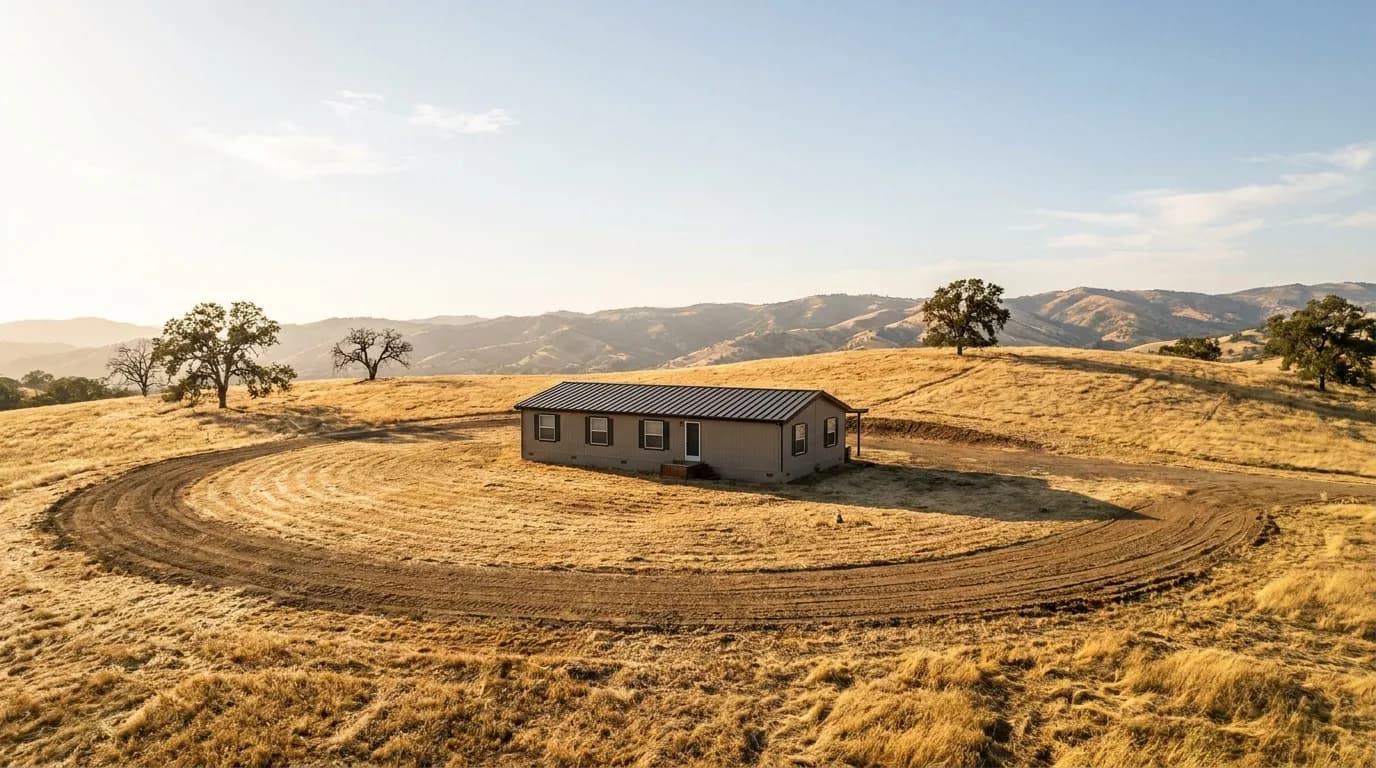
The practical translation for a buyer in Citrus Heights, Carmichael, Fair Oaks, Orangevale, North Highlands or Antelope is that most of the core suburban region is not inside a mapped zone. As you move east toward Folsom, Rancho Cordova's eastern edge, and the unincorporated land beyond, the picture changes, and so does the insurance conversation.
Do not assume based on a city name. Look the specific address up on the state's Fire Hazard Severity Zone viewer before you make an offer.
The 2025 law that changed FAIR Plan coverage for manufactured homes
The California FAIR Plan is the state's insurer of last resort. It exists for property owners who cannot get coverage in the ordinary market, and it sells basic property insurance rather than a full homeowners policy.
Manufactured home owners have historically had a harder time inside that system than owners of site built homes. SB 525, chaptered as Chapter 476 of the Statutes of 2025, addressed that directly. It defines basic property insurance offered through the FAIR Plan to include insurance for manufactured homes and mobilehomes on the same terms and conditions as basic property insurance sold for other residential dwellings.
The bill did not add anyone new to the FAIR Plan. What it did was require that manufactured home owners be offered the same coverage options, including full replacement cost, rather than a narrower product. It took effect January 1, 2026.
If you were quoted FAIR Plan coverage on a manufactured home before 2026 and were told replacement cost was unavailable, that is worth re-asking now.
What a FAIR Plan policy is and is not
Two points that cause real problems when people learn them after a loss.
It is narrow by design. FAIR Plan dwelling coverage is built around fire and closely related perils. It is not a substitute for a standard homeowners policy, and it typically does not carry the liability, theft and water damage coverage most owners assume they have. Coverage terms and maximum limits change, and the FAIR Plan has raised its maximum residential dwelling limit in recent years, so confirm the current figures directly with the FAIR Plan or your broker rather than relying on any article, including this one.
You usually pair it with something else. The common structure is a FAIR Plan policy for the fire exposure plus a difference in conditions policy from a private carrier covering the perils the FAIR Plan leaves out. Buying the FAIR Plan alone and calling yourself insured is the most expensive mistake in this whole area.
The FAIR Plan is also meant to be the last stop, not the first. Work through admitted carriers first, then the surplus lines market, then the FAIR Plan. An independent agent who writes manufactured homes in this region will know the current appetite far better than a national quoting site.
The discounts you are entitled to ask for
California became the first state to require insurers to reward wildfire mitigation with premium credits. The Safer from Wildfires regulation, at California Code of Regulations title 10 section 2644.9 and effective in October 2022, requires admitted property insurers that use wildfire risk in pricing to offer discounts for documented mitigation.
The framework identifies twelve mitigation measures across three categories: community-level designations, defensible space, and home hardening. A policyholder can qualify for multiple credits applied to the wildfire portion of the premium. AB 1, the Insurance and Wildfire Safety Act, took effect January 1, 2026 and requires the Department of Insurance to keep reviewing and updating these regulations as mitigation science advances.
The credits are not automatic. You have to document the work and ask. Ask at quote, not at renewal.
The manufactured-home-specific things underwriters look at
A manufactured home is not evaluated the way a stick built house is. In this region, the recurring items are these.
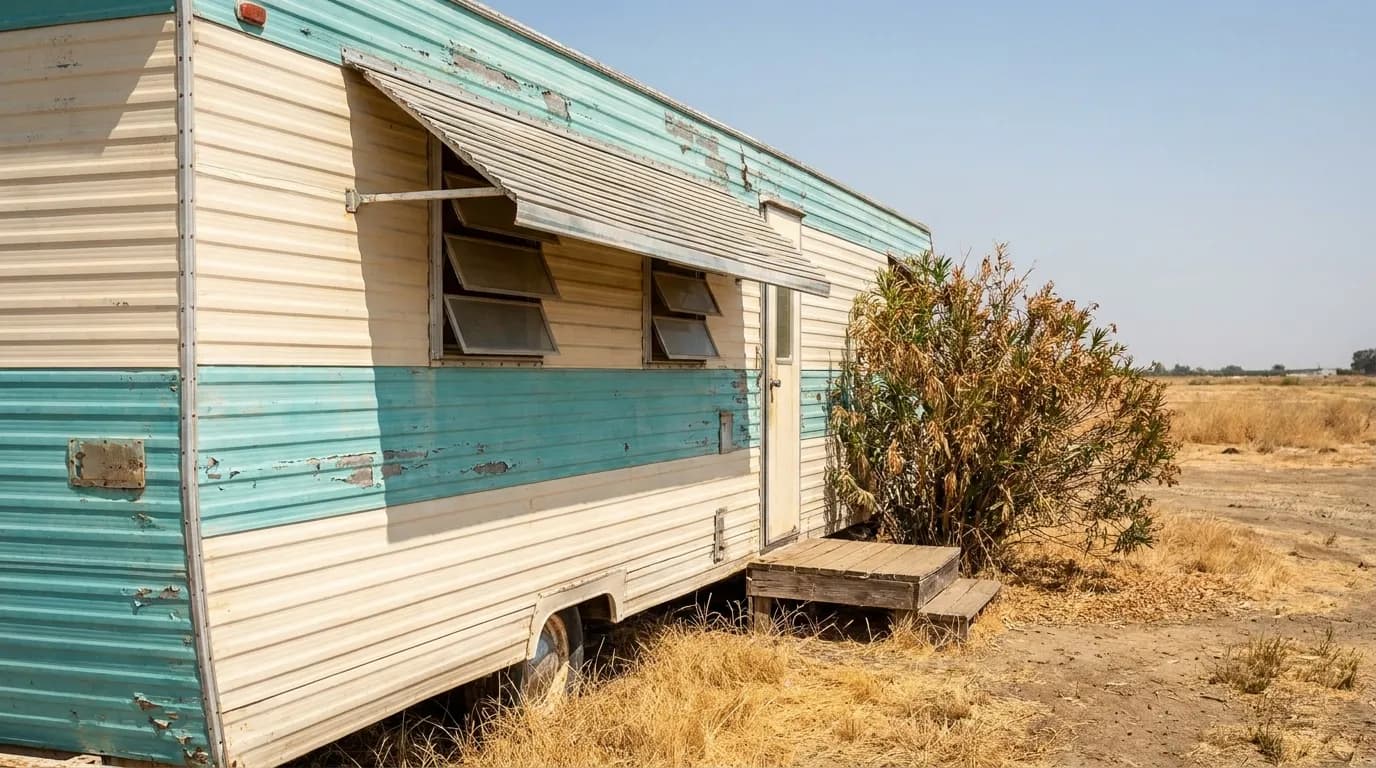
Age of the home. A home built before June 15, 1976 narrows the carrier list considerably and makes actual cash value settlement more likely than replacement cost. That is a structural issue, not a condition issue, and we explain why in pre-1976 homes in California.
Documented system updates. Electrical, roof, plumbing and heating updates change an underwriter's view far more than new flooring does. Get the receipts from the seller.
Roof class and vents. A Class A roof assembly and ember-resistant vents are the two home hardening items that most often move the needle on a manufactured home.
Under the home. Skirting is a fire pathway. Embers that get under a manufactured home find an unprotected floor system. Noncombustible skirting in good repair, with no gaps, is worth doing on its own merits and worth mentioning to the underwriter.
Attachments. Carports, awnings, decks, sheds and enclosed porches are frequently the first thing to ignite and frequently the thing not listed on the policy. Make sure they are scheduled.
The five feet closest to the home. Whatever the current state defensible space rules require in your location, keeping the strip immediately around the home clear of combustible material is the highest value thing you personally control. In a community you do not control the common area, which leads to the next point.
Living in a community changes who controls the risk
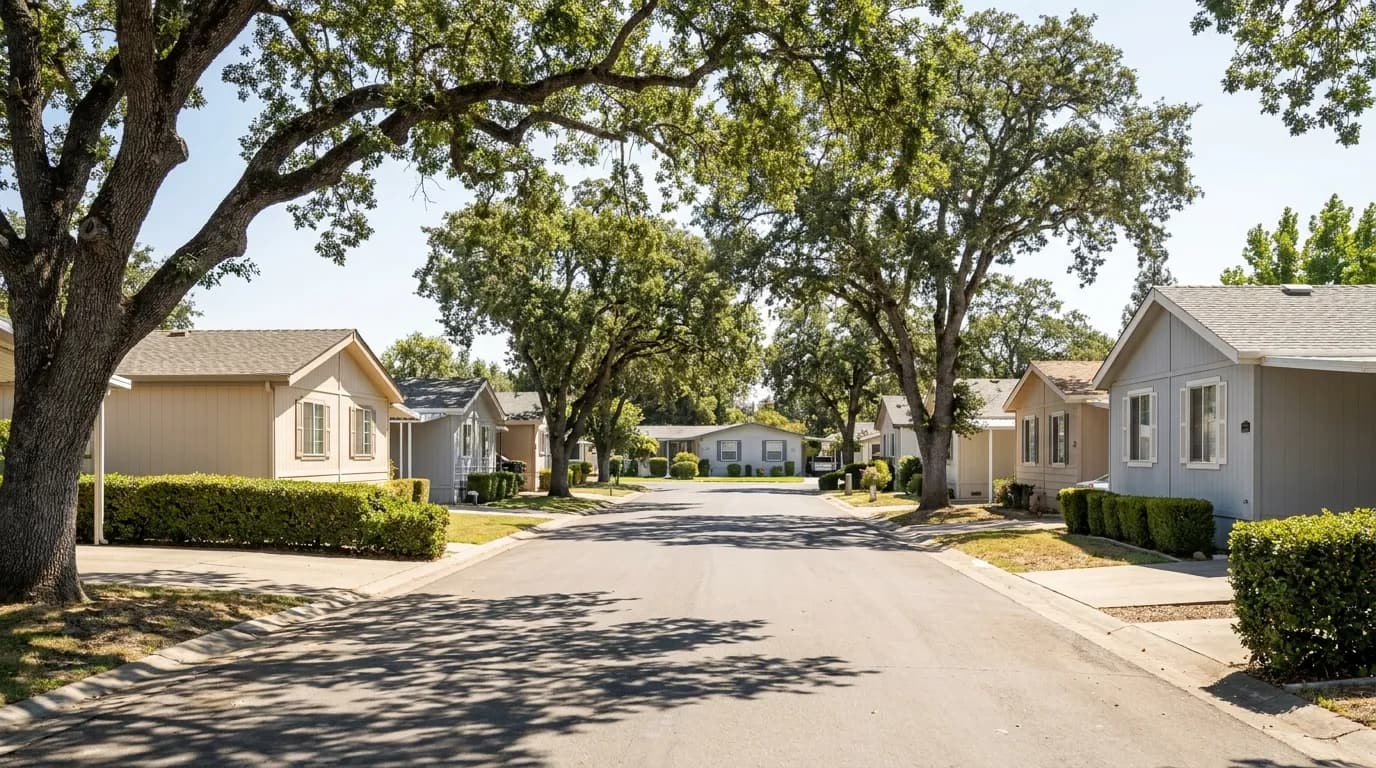
If you are buying into a 55+ community, your defensible space is not entirely yours. The community controls the common area, the perimeter, the greenbelt and the vegetation management schedule. Spacing between homes is set by the park layout, not by you.
That is worth two questions to management before you buy:
- What is the community's vegetation management and perimeter clearance practice, and how often is it done?
- Has the community pursued any recognized community-level wildfire designation?
The answers affect your premium and your risk, and a community that has a confident answer is telling you something about how it is run.
The practical sequence
- Look the exact address up on the state Fire Hazard Severity Zone viewer.
- Get a written quote on that specific home before you commit, not a general quote for the area.
- Work admitted carriers first, then surplus lines, then the FAIR Plan.
- If the FAIR Plan is the answer, price the difference in conditions policy at the same time and look at the total.
- Document every mitigation item and ask for the Safer from Wildfires credits by name.
- Schedule the carport, the awning, the deck and the shed on the policy.
- Re-shop at renewal. This market is moving quickly enough that last year's answer is not automatically this year's.
If you are comparing communities across Citrus Heights, Rancho Cordova, Folsom and Roseville and want to factor insurance into the comparison properly, see what is currently available and ask. If an insurance non-renewal is part of why you are thinking about selling, that is a conversation we have often.
*This article is general information about California insurance and wildfire regulation and is not insurance or legal advice. Carrier appetite, FAIR Plan terms and limits, hazard maps and state regulations change frequently. Confirm anything here with a licensed California insurance agent, the California FAIR Plan, or the California Department of Insurance before relying on it.*
Sources: CAL FIRE Office of the State Fire Marshal, Fire Hazard Severity Zones; California FAIR Plan; SB 525 (2025), California FAIR Plan: manufactured homes; California Department of Insurance, Safer from Wildfires; California Department of Insurance consumer hotline, 1-800-927-4357
Want a second opinion on your specific situation?
Every community and every home is a little different. Joe can walk through yours with you, whether you are buying, selling, or just working out whether the numbers make sense.