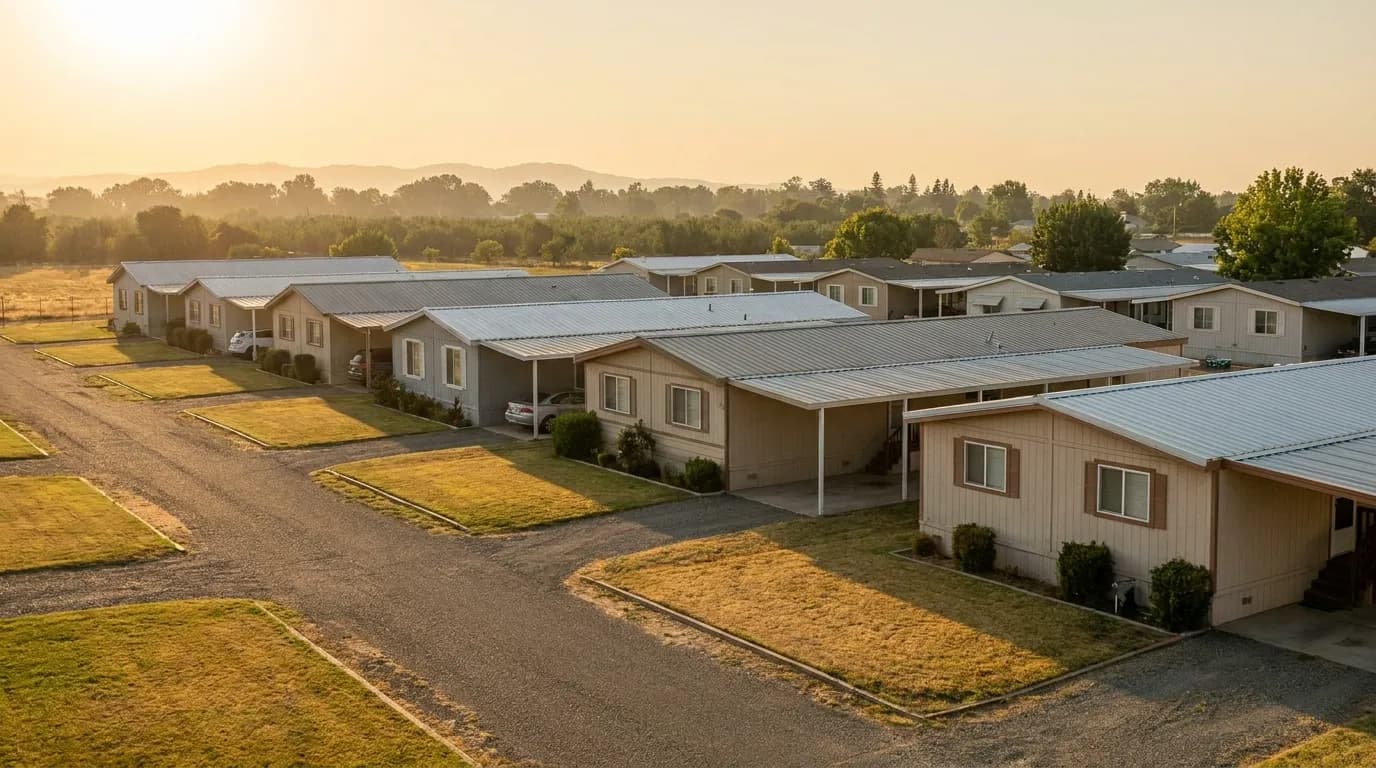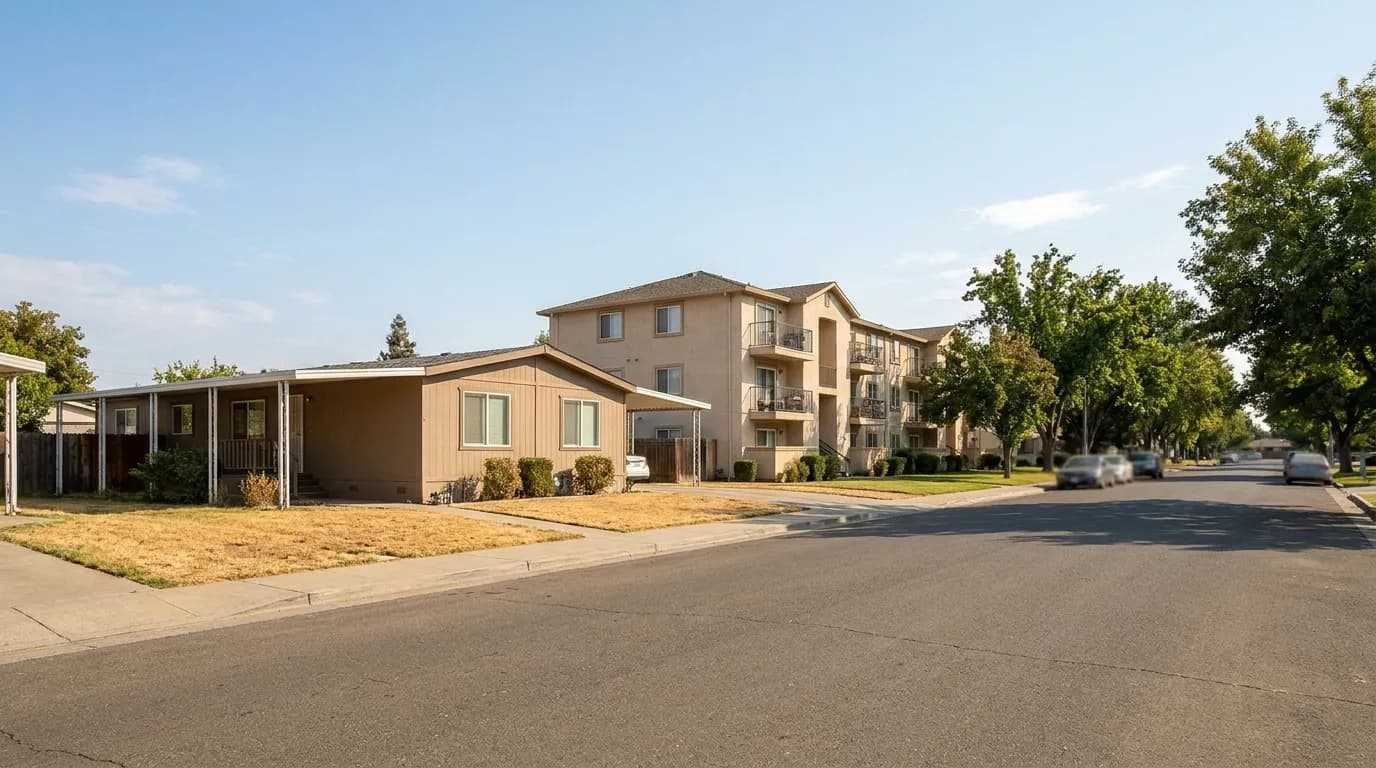
People shopping to downsize in this region usually end up comparing two things: a manufactured home in a Citrus Heights or Carmichael community, and a condo somewhere in the Sacramento metro.
They then compare the wrong number. The purchase price is the least informative figure in the decision, because these two are structurally different assets that behave differently every month and very differently over twenty years.
Here is the honest comparison, structure by structure. We are deliberately not quoting price or rent figures, because both markets move and any number we published would be wrong within months. What does not move is how the two are built.
What you actually own
In a condo, you own real property. Specifically, you own your unit plus an undivided interest in the common area, governed by a homeowners association operating under California's Davis-Stirling Common Interest Development Act at Civil Code section 4000 and following. You own dirt, in the legal sense, and you own a vote.
In a community, you own the home and you rent the space it sits on. The home is yours outright. The ground is not, and it never becomes yours. Your relationship to the land is a tenancy governed by the Mobilehome Residency Law.
That single difference generates almost every other difference below.
The monthly payment to the entity that runs the place
This is the comparison people think they are making when they compare HOA dues to space rent. They are not the same kind of number.
HOA dues are assessments levied by an association you are a member of, to fund a budget you receive. The Davis-Stirling Act requires the board to conduct a reserve study with a visual inspection at least once every three years under Civil Code section 5550, to review the reserve funding plan annually, and to disclose reserve health in the annual budget report. You elect the board. If dues are too low relative to the roof, the plumbing and the streets, that shows up in the reserve study and eventually in a special assessment.
Space rent is rent paid to a business that owns the land. There is no budget disclosed to you, no reserve study running to your benefit, no board you elect, and no special assessment either. Your statutory protection is the 90 day written notice of an increase required by Civil Code section 798.30. In most Sacramento area jurisdictions there is no local ordinance capping the amount, which we go through in detail in space rent and rent stabilization.
So the tradeoff is not "one is cheaper." It is:
- The condo gives you a vote, disclosure and reserves, plus exposure to special assessments you cannot fully predict.
- The community gives you no vote and no disclosure, but no special assessment either, and an increase you get 90 days to absorb.
Neither structure is safer in the abstract. A well run HOA with funded reserves is very predictable. A community with a long record of modest increases is also very predictable. A badly run version of either is not.
Financing, which is the difference most buyers feel first
A condo is financed with a mortgage. Conventional, FHA or VA, with the long amortization and the rates that come with real property lending. The complication is on the project side rather than the borrower side: the lender evaluates the association as well as you, looking at things like owner occupancy, delinquency rates, reserve funding and pending litigation. A perfectly qualified buyer can be blocked by a project that does not meet a program's requirements.
A manufactured home in a rented space is usually financed with a chattel loan, a loan on the home itself rather than on real estate. In exchange for faster approval and a down payment structure many buyers find easier, you generally accept a higher rate and a shorter term than a mortgage would carry. That shorter term is the part people miss: the monthly payment can look reasonable while the amortization schedule is very different from a thirty year mortgage.
There is a third path worth naming. If a manufactured home sits on land you own and is affixed to a permanent foundation with a recorded HCD 433A, it becomes real property and can be financed like a site built home. That is not available inside a community, because you do not own the space. We cover the mechanics in how a California manufactured home is taxed, and if you want to know which loan you would actually qualify for, start with financing.
Taxes
The condo is assessed as real property by the county assessor and receives a property tax bill, with the Proposition 13 factored base year value increasing by no more than 2 percent a year.
The manufactured home is either on the local property tax roll or in the HCD annual registration system, depending on when it was first sold, and either way you are taxed on the home and not on land you do not own. Homes without a recorded 433A are treated differently on the downside as well: if market value falls below the factored Proposition 13 value, the lower market value applies temporarily under Proposition 8, and the factored value is restored when the market recovers.
How the two behave as assets
This is where the comparison gets uncomfortable, and where we would rather be direct than tactful.
A condo is real property. Its value tracks the Sacramento real estate market, for better and for worse. It has a mortgage market underneath it, which means a broad pool of buyers.
A manufactured home on rented land is a structure sitting on someone else's dirt. It has no land component to appreciate. What it has is a depreciating building plus whatever premium the community location carries. Homes in communities often do not appreciate the way real property does, and in some markets they lose value in real terms even while the surrounding neighborhood rises.
There are two forces working against you. The structure ages, and buyers are financing through a narrower and more expensive lending channel, which limits what they can pay.
Anyone who tells you a home in a rented space is a growth asset is selling. The reasonable case for it is different and it is a good one: a lower entry cost, a single story floor plan, a smaller maintenance footprint, a community of people in the same stage of life, and the ability to keep more of your capital rather than sinking it into real estate. That is a legitimate way to buy your sixties and seventies. It is just not an appreciation play, and we say so in an honest look at downsizing.
Selling, which is not symmetrical either
Selling a condo is a familiar real estate transaction. Listing, escrow, a buyer with a mortgage, a deed.
Selling a home in a community adds a party. Management has a right of prior approval of your buyer under Civil Code section 798.74, and if the home is on the local property tax roll, HCD will not transfer title until the county tax collector issues a tax clearance certificate. Both are manageable. Both take time that a condo sale does not.
The question that actually decides it
Not "which is cheaper," but this: do you need this purchase to hold value, or do you need it to lower your monthly cost and free up capital?
If the equity matters, the condo's structure is built for that and the community home's is not. If the goal is to reduce what you spend every month, stay on one level, and keep money available for the rest of your life, a community home in Citrus Heights, Carmichael or Roseville can do that in a way a condo often cannot.
Both answers are defensible. Pick the one that matches your actual goal, and get the total monthly number for each, rent or dues plus utilities plus insurance plus taxes, before you decide. See what is currently available if you want to price the community side honestly.
*This article is general information and is not legal, tax or financial advice. California law, HOA governing documents, lending guidelines and local ordinances change, and individual situations vary widely. Consult a California attorney, a tax professional or a licensed lender about your circumstances.*
Sources: Davis-Stirling Common Interest Development Act, Civil Code section 4000 and following; Civil Code section 5550, reserve studies; Civil Code section 798.30; Sacramento County Assessor, Modular, Mobile, and Manufactured Homes
Want a second opinion on your specific situation?
Every community and every home is a little different. Joe can walk through yours with you, whether you are buying, selling, or just working out whether the numbers make sense.