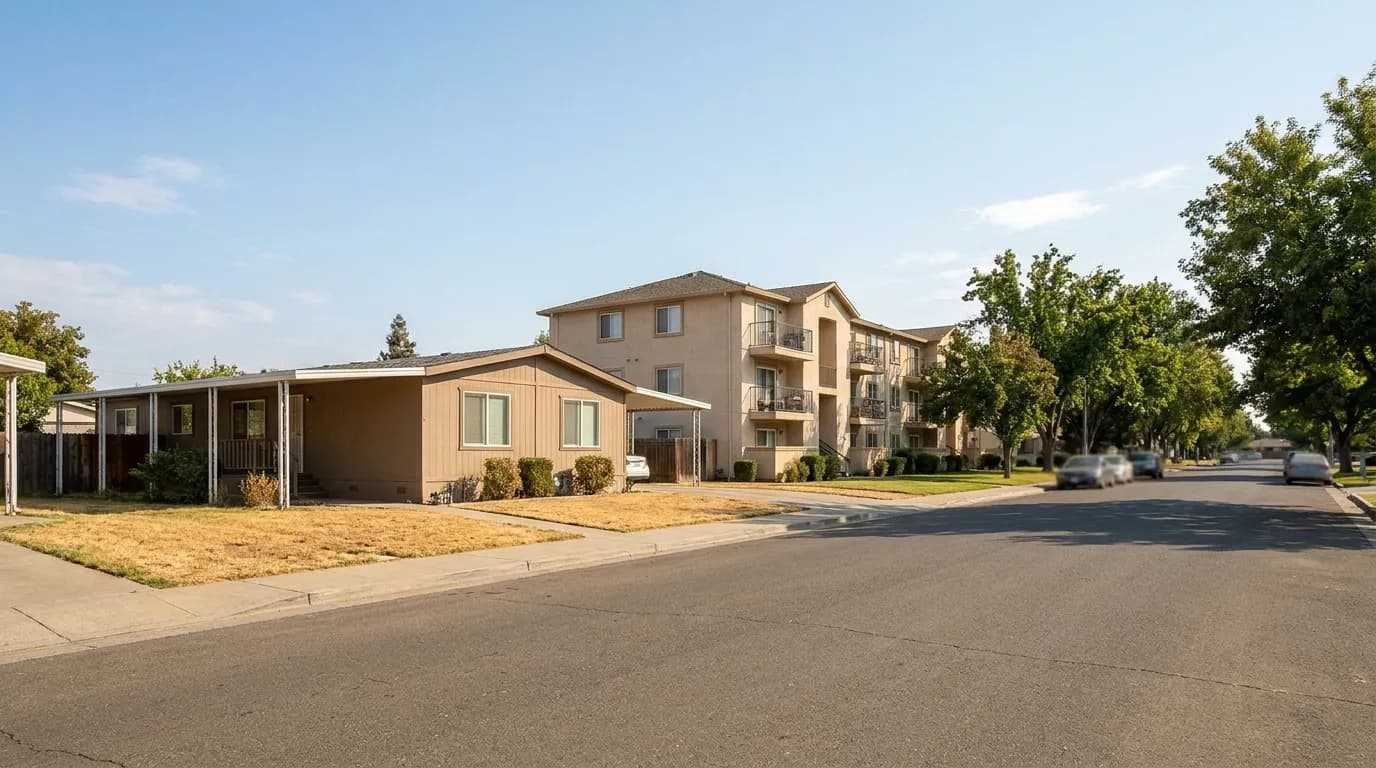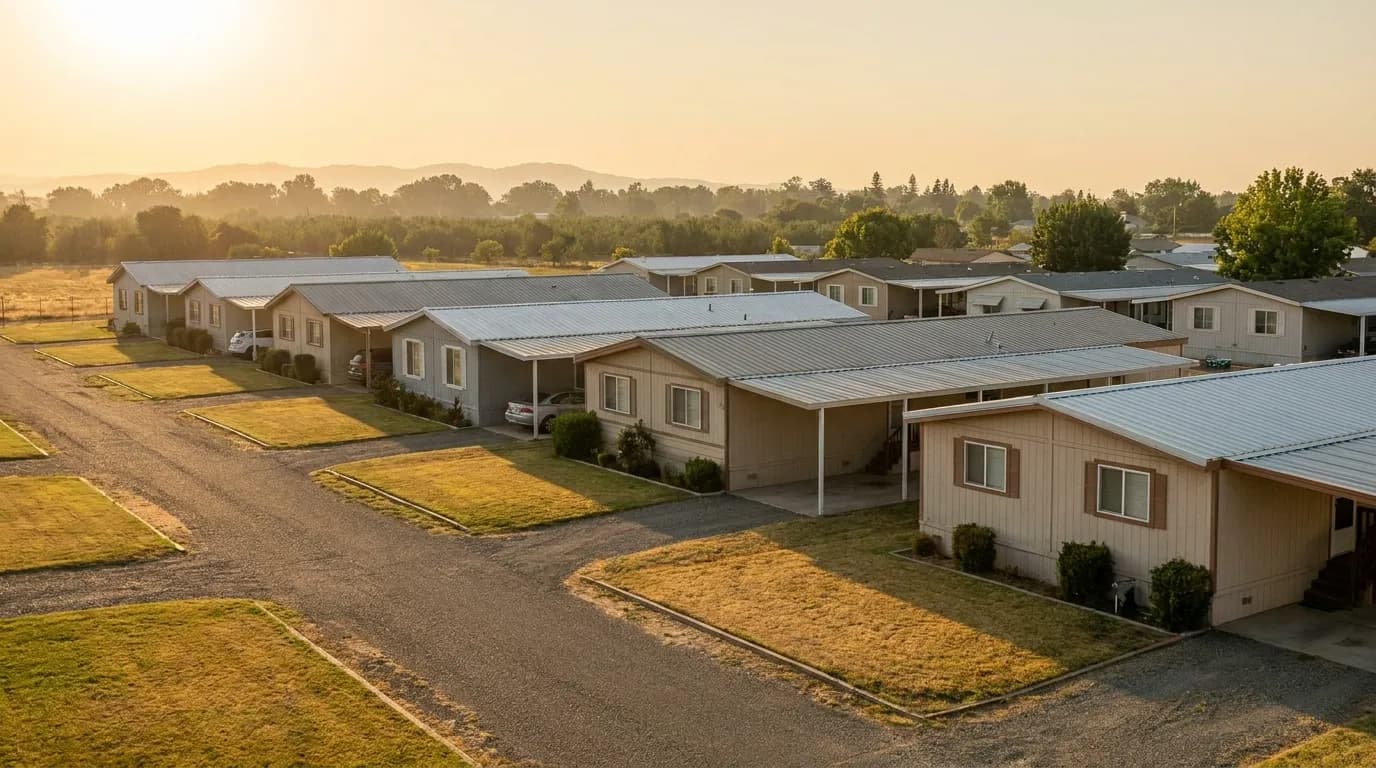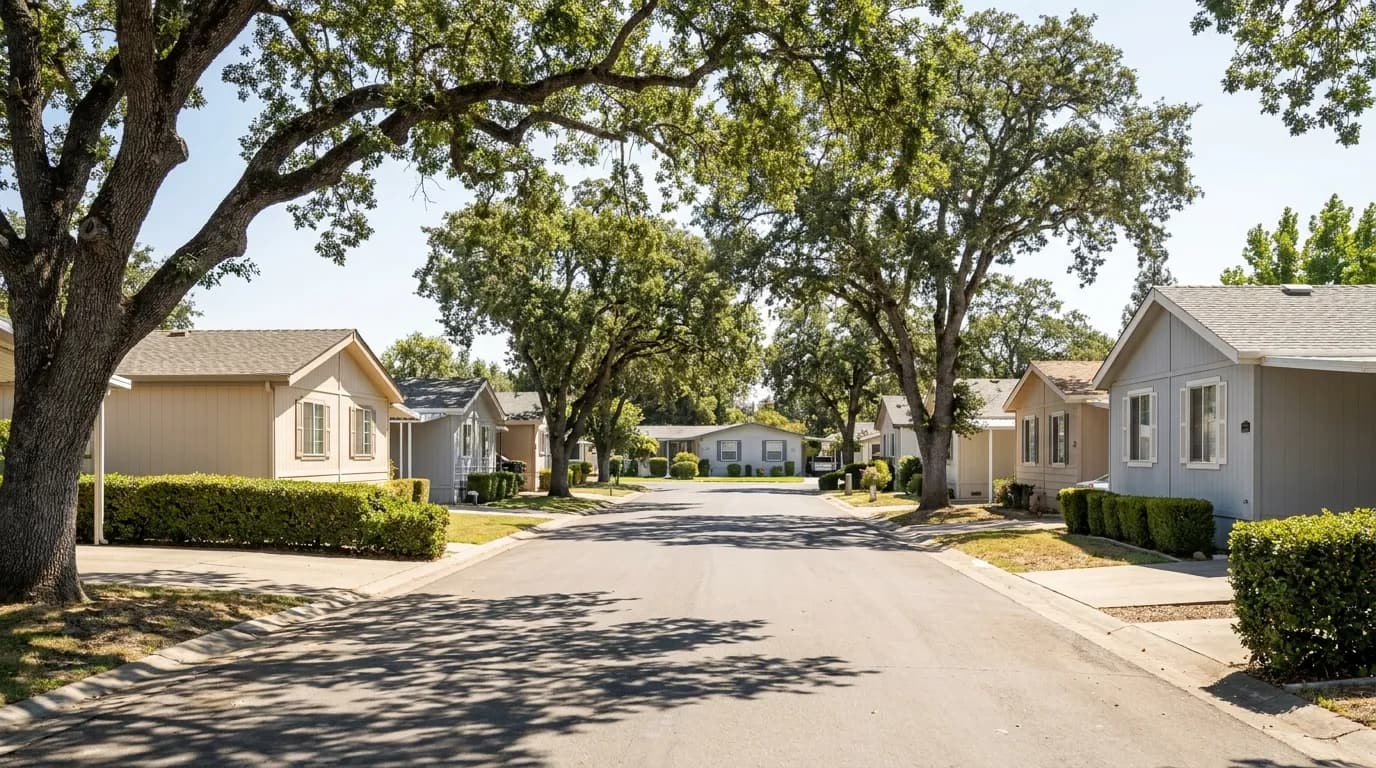
The conversation usually starts the same way. The house in Carmichael or Orangevale is bigger than two people need, the yard has become work rather than pleasure, the stairs are becoming a consideration, and there is real equity sitting in it doing nothing.
A 55+ manufactured home community looks like the answer. Single story, small yard, people your age, a clubhouse, and a purchase price that leaves most of your equity intact.
For a lot of people it genuinely is the answer. But it is a real decision with real downsides, and you deserve to hear them from someone who sells these rather than only from someone who does not.
What actually works about it
Start with the honest case in favor, because it is strong.
Your monthly housing cost usually drops, and your maintenance burden drops more. No roof fund, no exterior paint cycle, no large yard, and in most communities the common area maintenance is somebody else's job.
You stay on one level. The single biggest predictor of whether someone can stay in their own home into their eighties is whether there are stairs in it. Almost every manufactured home is single story with a manageable footprint.
You keep your capital. This is the part people underrate. If you sell a house and buy into a community, a substantial share of your equity stays liquid instead of being converted back into real estate. For someone whose retirement income is fixed, having money available matters more than having it in a wall.
The social structure is real. Age-restricted communities are one of the few housing types in America where your neighbors are at the same life stage, know your car, and notice if your blinds have not opened. That is not a soft benefit. It is a genuine safety net.
You stay in the area. Communities across Citrus Heights, Carmichael, Fair Oaks, Orangevale, North Highlands, Antelope, Rancho Cordova, Roseville and Folsom let people downsize without leaving the doctors, the church, the grandchildren and the roads they know.
Downside one: the space rent goes up, and in most of this region nothing caps it
You own the home. You rent the ground. That rent is not fixed for life, and it is not fixed to your income.
Your statutory protection is Civil Code section 798.30, which requires 90 days of written notice before any increase. That is notice, not a cap.
California leaves actual rent limits to local government, and when we reviewed the statewide list of mobilehome park rent stabilization ordinances, we did not find one for Sacramento, Sacramento County, Citrus Heights, Roseville, Folsom, Rancho Cordova or Elk Grove. The one nearby jurisdiction that appears on it is Rocklin, in Placer County. There is a statewide cap at Civil Code section 798.30.5, but it applies only to a park located within and governed by the jurisdictions of two or more incorporated cities, which is an unusual situation. The full picture is in our piece on Sacramento space rent.
So here is the honest framing. You are trading a mortgage that ends, or a paid off house with only taxes and insurance, for a payment that continues for the rest of your life and can rise. On a fixed income, over twenty years, that is the risk in this decision. Not the home. The ground under it.
Two things make it worse when they happen. One is a change of ownership of the community, which can bring reassessment and, depending on your lease, pass-through increases. The other is simply time: a community with a long history of modest increases can change hands and change behavior.
Downside two: the home is unlikely to appreciate the way a house does
This is the one people most often have wrong when they call us.
A manufactured home on a rented space has no land component. What you own is a structure that ages, sitting on ground that belongs to someone else. There is no dirt underneath it appreciating on your behalf.
On top of that, your future buyer will most likely be financing through the chattel market rather than with a mortgage, at higher rates and shorter terms, which limits what they can pay. A narrower and more expensive lending channel puts a ceiling on price.
The result is that homes in communities often do not appreciate like real property, and in some markets and some periods they lose value in real terms while the neighborhood around them rises. That can be true even when the home is well maintained and the community is desirable.
If the money you put into this needs to grow, or needs to be there at a predictable number for a future care decision or an inheritance, this is the wrong vehicle and you should look hard at a condo or a small house instead. We lay the two structures side by side in manufactured home or Sacramento condo.
The smaller things that surprise people
You do not get a vote. Unlike a condo association, a community is a business that owns land. There is no board you elect, no budget disclosed to you, and no reserve study working in your interest. There are also no special assessments, which is a genuine advantage, but the tradeoff is control.
The rules are real and they are enforceable. Pets, vehicles, guests, storage, exterior changes, landscaping. Read them like you will live under them, because you will.
Your buyer needs management's approval. Under Civil Code section 798.74, management has a right of prior approval of a purchaser who will stay in the community. That is regulated and time bound, but it is a party in your sale who is not you. See getting approved by a 55+ community.
Insurance is not automatic. Depending on the location and the age of the home, coverage can be harder to place than you expect. Get a written quote on the specific home before you commit, as we describe in insuring a manufactured home here.
Selling later takes longer than selling a house. Management approval, the tax clearance certificate and the HCD title transfer all add time.
A younger spouse may or may not qualify. Federal law requires that at least 80 percent of occupied units have an occupant 55 or older, which leaves room, but each community sets its own policy for the rest. Ask before you fall in love with a specific home.
The stress test to run before you decide
Take an hour and do this honestly.
- Get the community's last five years of rent increase notices. They exist. Ask.
- Project your space rent forward fifteen and twenty years at the rate that history implies, not at the rate you hope for.
- Add utilities, insurance and the home's own taxes or registration to that projected number.
- Compare it to your projected fixed income at those same future dates.
- Ask yourself the blunt question: if that monthly number were substantially higher than today, would I still be fine? If the answer is no, either pick a different community or a different structure.
- Do not spend your entire sale proceeds on the home. The reason to downsize this way is to keep capital available. Keeping it available is the whole point.
- Assume the home will not appreciate. If the decision still makes sense on that assumption, it is a good decision. If it only makes sense assuming appreciation, it is not.
Where that usually lands
Most people who run that test and still want to move are right to move. They are buying a lower monthly cost, a single story, less work, good neighbors and liquidity, with clear eyes about the rent and the resale.
The ones who should not move are usually the ones who were counting on the home to hold or grow their money. There is nothing wrong with wanting that. It is just a different purchase.
If you want to walk through the numbers on a specific community in this area, see what is currently available, or talk through what financing would actually look like before you commit to anything. If the first step is selling the house you are in now, start there.
*This article is general information and is not legal, tax, financial or insurance advice. California statutes, local ordinances, community rules and market conditions change. Consult a California attorney, a tax professional or a licensed financial adviser about your own circumstances.*
Sources: Civil Code section 798.30; Civil Code section 798.30.5; Civil Code section 798.74; 24 CFR part 100 subpart E, Housing for Older Persons; California HCD Mobilehome Assistance Center
Want a second opinion on your specific situation?
Every community and every home is a little different. Joe can walk through yours with you, whether you are buying, selling, or just working out whether the numbers make sense.