Selling a manufactured home that sits on a rented space is a real estate transaction with a third party in it who is not you and not your buyer, and who has no particular deadline.
That is the whole difficulty in one sentence. Everything else is logistics.
California law gives sellers in this position a specific set of rights, most of them in Article 7 of the Mobilehome Residency Law, sections 798.70 through 798.83. Most sellers have never read it, which is why they find out about a requirement two weeks before close instead of two months before listing.
Your rights, with the section numbers
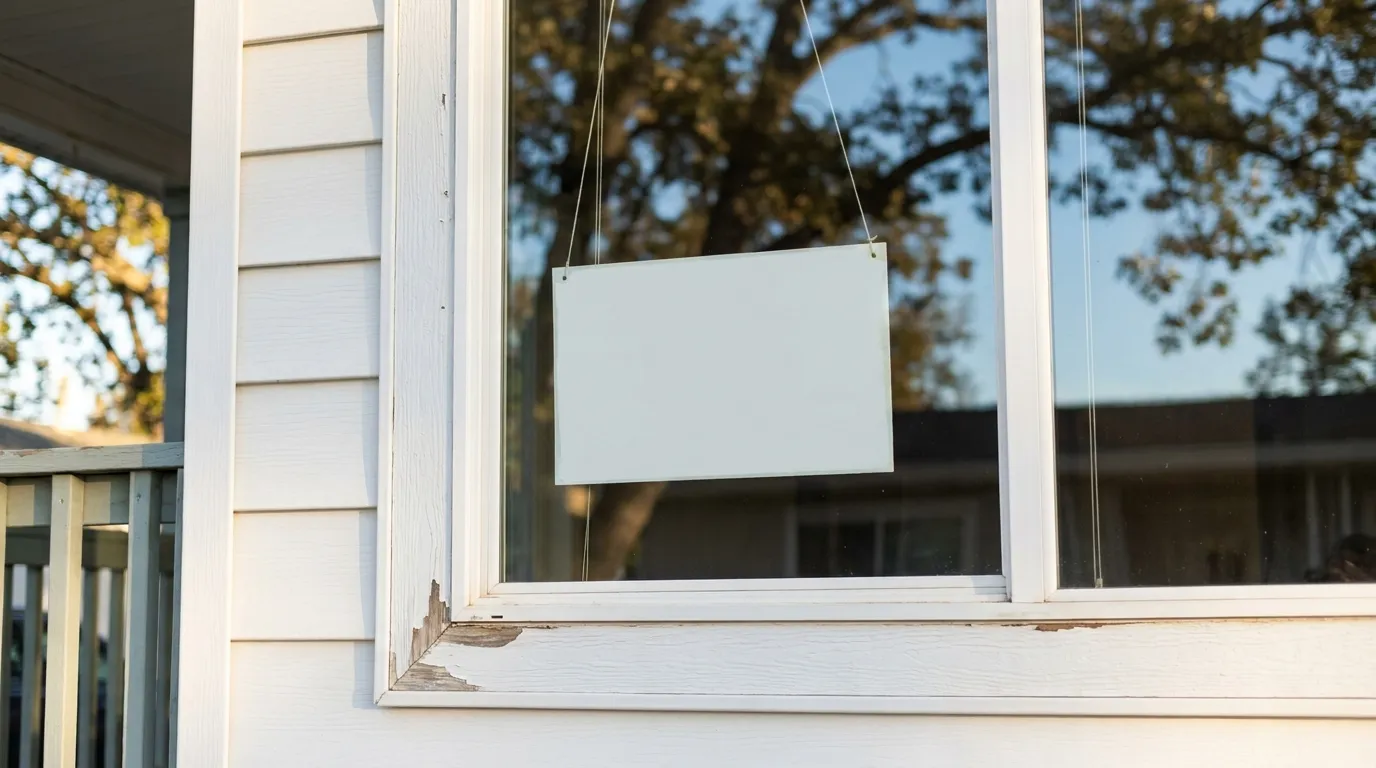
You can advertise it yourself. Civil Code section 798.70 protects a homeowner's right to display a sign advertising the home for sale. The statute is specific: one sign, with a face not exceeding 24 inches wide by 36 inches high, in a window, on the side of the home facing the street, or facing the front. Management may require an L frame style. You may also display one open house sign where park rules permit, and you may attach leaflet holders to the sign or the home.
Management cannot force you to list through them. Section 798.71 restricts management from requiring that the home be listed or shown through the park as a condition of a sale in place.
Management cannot charge you a transfer or selling fee as a condition of a sale inside the community, under section 798.72, unless management actually performed a service in the sale. And management may not perform such a service unless it was requested in writing by the homeowner, the heir, the joint tenant, or the personal representative.
Those three together are the seller's baseline. If any of them is being ignored, that is the first thing to address.
Required repairs on resale, and the 15 business day lever
This is the right almost nobody uses, and it is genuinely useful.
Civil Code section 798.73.5 limits what management may require you to repair or improve as a condition of a sale in place. In broad terms, management may require work only on items not owned and installed by management, only where the requirement comes from a local ordinance, a state statute, or a park rule implementing one, and only on the exterior of the home, its appurtenances, or an accessory structure.
More importantly, on your written request management must provide a written summary of the required repairs within 15 business days, with specific references to the park rules, local ordinances and state statutes it is relying on. If management fails to provide that summary, it is deemed to have voluntarily waived those repair requirements, other than ones required by health and safety regulations.
The statute also makes the point that the repairs that can be required at sale are the same ones that could be required at any other time during a residency. Sale is not an occasion to raise the standard.
Send that written request the week you decide to sell. It converts a vague and moving list into a specific, cited, time bound one, and it is the single most effective thing a seller in a California community can do early.
Your buyer has to be approved, and there are deadlines
Civil Code section 798.74 governs this, and the obligations run in both directions.
You are required to give notice of the sale to management before the sale closes. That starts the clock.
Within 15 days of that notice, management must give both you and your buyer, in writing, the standards it customarily uses to approve a tenancy application, including the minimum credit score it requires, and a list of all the documentation it will require.
Within 15 business days of receiving all the information it asked for, management must notify both of you in writing of acceptance or rejection. If management fails or refuses to notify, it is deemed to have approved the application.
Management may reject your buyer only for an inability to pay the rent, estimated utilities and other charges; a prior tenancy history indicating likely noncompliance with the rules; or fraud, deceit or concealment of a material fact. In an age-restricted community, management may also require compliance with a valid rule limiting residency to older persons, under section 798.76. Our fuller walkthrough of that process is in getting approved by a 55+ community.
One thing to tell your buyer plainly: the space rent they pay may not be the space rent you pay. Communities commonly set a new rate for an incoming resident. Get their number in writing from management early, because a buyer who discovers a higher rent late is a buyer who walks.
The escrow realities
Here is where community sales differ most from a house sale, and where the calendar gets away from people.
Title transfers through HCD, not the county recorder. For a home in a rented space, the ownership record is an HCD title and registration, not a deed. The transfer runs through HCD.
HCD will not transfer the title without a tax clearance certificate if the home is on the local property tax roll. The authority is Revenue and Taxation Code section 5832. The county tax collector issues it. On a written demand from the escrow officer, the tax collector is directed to forward a conditional tax clearance certificate or tax clearance certificate within five working days where no tax liability exists.
Two things follow. First, which county issues it depends on where the home sits, so a Roseville sale runs through Placer County and a Citrus Heights, Carmichael or Rancho Cordova sale runs through Sacramento County. Second, when the certificate is requested after the start of the calendar year, tax collectors commonly estimate the upcoming fiscal year's taxes and require that estimate to be paid before releasing the certificate. Budget for it. We break the whole tax picture down in HCD registration versus local property tax.
An unreleased lien on the title stops everything. This is the most common preventable delay we see. A loan that was paid off years ago, from a lender that has since been acquired or dissolved, still shows as a security interest on the HCD record. Clearing it can take weeks. Pull your registration card and look at the lien section now, while nobody's financing clock is running.
Use escrow, and use someone who has done manufactured homes. HCD licenses dealers and salespersons in this industry and its Mobilehome Assistance Center handles complaints including escrow violations, which tells you how often that part goes wrong. An escrow officer who handles these routinely knows to order the tax clearance certificate early, to confirm the lien status, and to sequence the HCD paperwork correctly. One who does not will learn on your transaction.
A realistic sequence
- Send management a written request for the section 798.73.5 repair summary. Start the 15 business day clock.
- Pull your HCD title and registration and confirm there is no unreleased lien.
- Confirm your space rent account is current and get the payoff figure if it is not.
- Get a current copy of the park rules and the community's tenancy approval standards, so you can pre-qualify buyers instead of discovering problems later.
- Price it against the financing reality. Most buyers in a rented space are using chattel loans or cash, and the home's age drives which. If it predates June 15, 1976, the pool narrows sharply, as we explain in pre-1976 homes in California.
- When you have a buyer, notify management immediately so the section 798.74 clocks start.
- Open escrow and order the tax clearance certificate at the same time, not after approval.
Run in that order, a community sale is very manageable. Run in reverse, it is the kind of sale that takes four months and loses two buyers along the way.
If you would rather not coordinate management, escrow, HCD and a buyer's lender yourself, that coordination is most of what we do. Tell us about your home, or if you are also looking at what to buy next, see what is available.
*This article is general information about California law and is not legal advice. The Mobilehome Residency Law contains provisions not summarized here and is amended regularly, and county and HCD procedures change. Consult a California attorney or contact HCD's Mobilehome Assistance Center about your situation.*
Sources: Civil Code section 798.70; Civil Code section 798.73.5; Civil Code section 798.74; Revenue and Taxation Code section 5832; California HCD Mobilehome Assistance Center
Want a second opinion on your specific situation?
Every community and every home is a little different. Joe can walk through yours with you, whether you are buying, selling, or just working out whether the numbers make sense.